
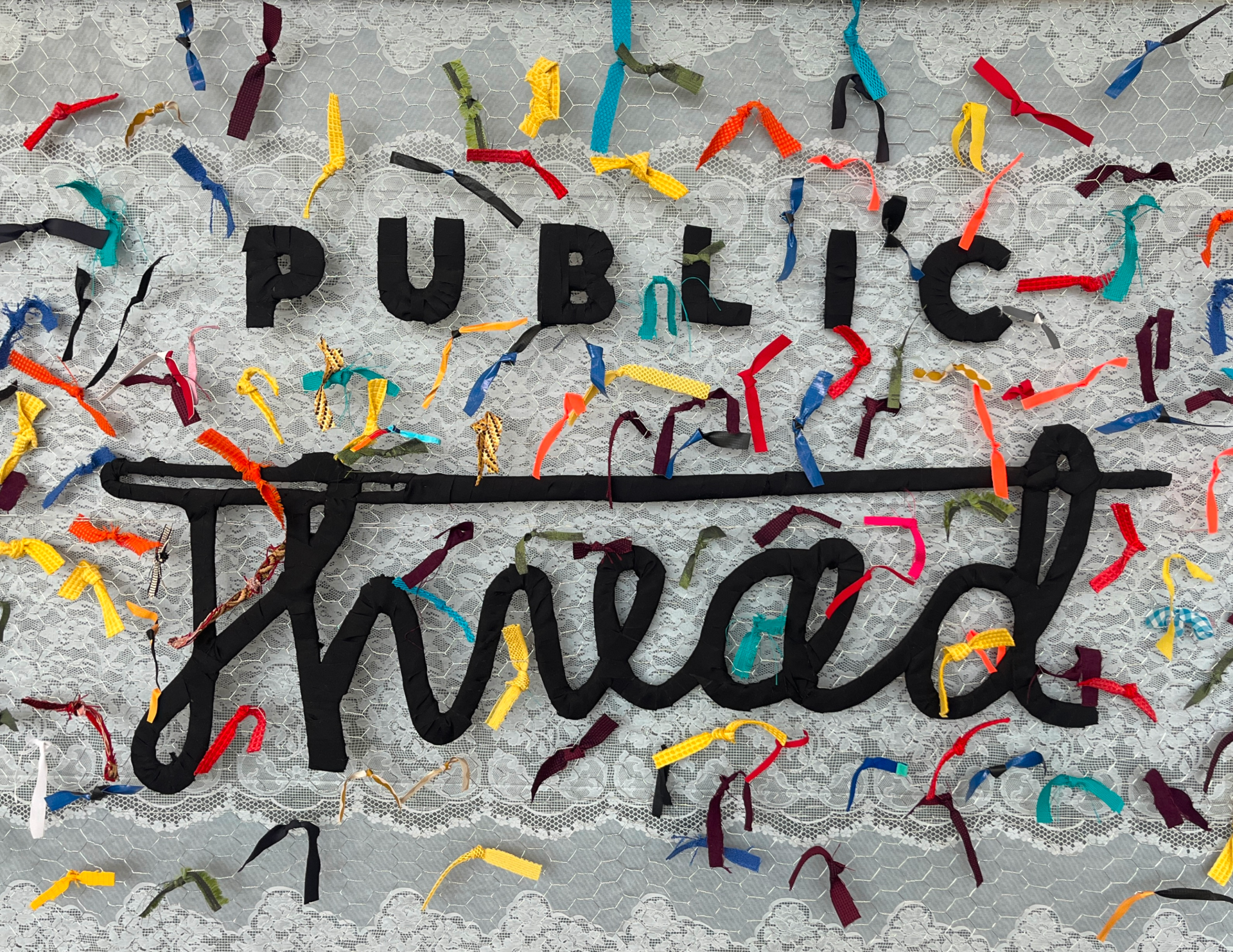
Public Thread
Description
Graphic Design Forum (ART 318) is a semester-long course where students work together like a small design agency. Instead of completing hypothetical projects, we partner with a real client and create design solutions based on their actual needs. This semester, our class collaborated with Public Thread, a nonprofit organization in Grand Rapids that works to reduce textile waste and promote sustainable fashion practices.
The class was divided into three teams: B2B (Business-to-Business), Marketing, and Education/Community (the team I was part of). Each team focused on a different aspect of the organization’s goals, but we worked together as one agency. As a class, we created a new portfolio catalog, redesigned their website and social media presence, and developed a targeted marketing campaign to better reach their audience.
Objective
Our goal as a class was to increase community awareness and emphasize Public Thread’s mission. We aimed to refine Public Thread’s audience while helping them achieve their goal of educating the public on sustainability through various marketing strategies and social media outlets. Additionally, we sought to strengthen Public Thread’s B2B partnerships by streamlining communication and expanding their network of connections.
Before
Before jumping into the design, let’s discuss the current branding for Public Thread. Public Thread’s branding feels mixed and not very consistent, especially in the digital space. The mission about sustainability and education is clear, but the visuals don’t fully support it. On Instagram, there are different styles of text, colors, and graphics that don’t always match, so the page looks a bit scattered. Additionally, the website uses heavy, dark banners and simple fonts that don’t reflect the creative, hands-on feeling of sewing and upcycling.
Research
For our background research, we first looked closely at Public Thread and its mission. We learned that the organization works to reduce textile waste by turning unused or leftover fabric into new products instead of sending it to landfills. We also researched the larger issue of textile waste in the United States, circular design, and why sustainable design and reuse are important. In addition, we studied Public Thread’s programs, partnerships, and community impact to better understand who they serve and how they operate.
Experience
Along the way, we made multiple visits to Public Thread, which gave us a firsthand understanding of how the organization operates. During our time there, we toured their warehouse, observed daily operations, and saw how materials are sorted, stored, and prepared for production. One interesting detail we learned is that many of their fabrics come from community donations or from companies with extra supplies they cannot use, helping reduce textile waste.
As we became more familiar with their space, we also interviewed several team members, including sewists, design interns, production managers, and the CEO. These conversations gave us insight into the organization’s culture and helped us understand why they chose to work at a nonprofit like Public Thread.
Since sewing is the foundation of their company, we participated in one of the public classes they offer, Sewing 101. In this class, we practiced threading a needle, setting up a sewing machine, and creating different types of stitches. Taking the class allowed us to better appreciate the skill, patience, and care that goes into their work and strengthened our overall understanding of their mission.
Final Design
The final design includes the contributions made by the Education/Community. As my role focused specifically on the digital components, the scope of my work included a redesigned website: the donations page, programs page, and sign-up sub-page. As well as a mockup of a rebranded social media presence.