
Easy Peasies
Description
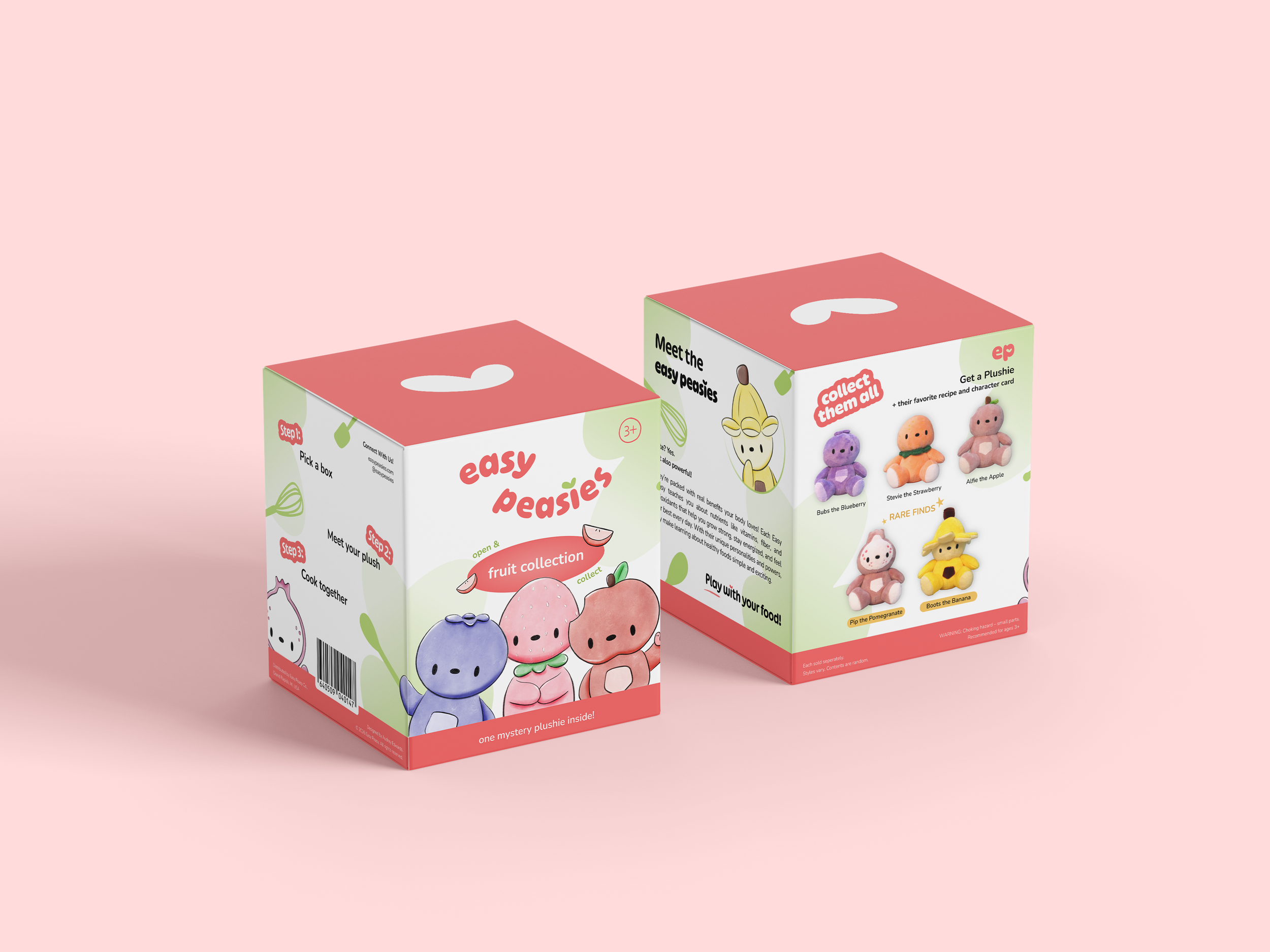
Easy Peasies is a brand that combines the excitement of plushies and blind boxes with educational, hands-on cooking experiences for children. Each blind box includes a plush and a character card, and a kid-friendly recipe featuring that food as the main ingredient. The recipes are key to transforming play into an interactive learning experience, allowing children and parents to cook together while building basic skills in the kitchen. Supporting components of the brand include the website design which helps extend the experience beyond the box.
Objective
Children today are constantly surrounded by screens, which often limits the time they have for hands-on learning experiences. Research shows that while children and young adults are interested in learning how to cook, food and its education are often presented as a chore or rules to follow rather than something engaging and fun. Although there are many benefits to being exposed to cooking at a young age, like better dietary habits, stronger life skills, and increased confidence in the kitchen later in life. On the other hand, toys, especially plushies and collectible items, remain highly engaging for children due to their emotional comfort, sense of surprise, and collectibility. How might design use play to teach children about food, healthy eating, and basic cooking skills in a way that competes with digital entertainment?
Process
Basic Research
Phase one focused on understanding the big idea and problem I wanted to solve. Research from this phase included finding statistics and learning about behavior. Additionally, a competitor analysis and identification of the target audience's needs were completed.
Static System
Phase two centered on developing initial concepts and visual directions. I experimented with illustrations, colors, type, and more to create a clear and consistent design system that reflects the purpose of appealing to children while also educating them.
Production
Phase three focused on refining the brand system and implementing it across both physical and digital products. This included developing lo-fi and mid-fi prototypes before producing final outcomes for the plushies, character cards, tags, blind box packaging, and stickers. In addition, I created digital components, including a mobile recipe page and a desktop website, ensuring a cohesive experience across all touchpoints.
Exhibition
Phase four consisted of creating an exhibition alongside other graphic designers, each presenting their own brand or campaign. Individually, I focused on how to display Easy Peasies in an engaging and interactive way that clearly communicated the problem I was addressing. As a group, we were responsible for promoting the exhibition through physical materials such as postcards and posters, as well as across social media platforms. We also collaborated on organizing the reception, including food, music, and seating, to create a welcoming and enjoyable experience for guests.
Why Blind Boxes
Kids are naturally drawn to plush toys because they provide emotional comfort, encourage imaginative play, and often become companions. Pairing this with the appeal of blind boxes, which has surprise, collectibility, and excitement, creates a highly appealing experience for children.
-
Primary audience consists of children ages 6-10. They are naturally drawn to stuffed animals and toys. Additionally, they are in a developmental phase that is important for shaping their food habits/education.
The secondary audience is parents. Parents often struggle with picky eaters and screen dependency with their children, so this brand aims to use play and participation as the main source of learning.
-
Warm, Friendly, Informative, Easy, Playful
-
When asked to rate their confidence in the kitchen, only 33% of Gen Z consider themselves skilled cooks. Additionally, nearly half (49%) are hesitant to cook for others because they lack cooking skills.
Illustrations
One of the first steps in the ideation process was creating these illustrations, which helped define how the characters of the brand would look, their personality, and the overall visual style. From there, the designs were refined to ensure they could translate effectively into physical forms. Plushies were then sewn to life straight from the illustrations. This part was outsourced, where I was able to collaborate with a sewer on how to make these real.
Plushies
Process Book
My design process book documents the full journey of my project, from initial ideas to the final outcome. It begins with early assumptions and research that I had when it came to children, cooking, and food education. From the research, I began experimenting with how the brand will look visually. This included illustrations, type, color, logo, etc. Once finalizing the ideation, I was able to implement the brand styles into the physical products. The process book highlights not only my final results, but also the overall problem, decisions, and iterations that shaped the project.
Final Design
The final product includes a cohesive brand and supporting assets, such as a logo, color palette, typography, and more. It also features plushies, character cards, a scannable tag, stickers, and the blind box. The web design includes a desktop homepage layout and a mobile recipe page.